Surgical Hair Restoration
Hairline Lowering Surgery
Surgically advance your hairline 1–2 inches for a naturally lower, more balanced forehead — immediate full-density results without grafts, waiting, or sparse grow-in phase.

Dr. Carl Truesdale, MD
Facial Plastic Surgeon · Beverly Hills
“Patients tell us they've spent years hiding their forehead — with bangs, with hats, by avoiding photos. Hairline lowering changes all of that in a single day. The result is immediate, natural, and permanent. It's not about a new face — it's about finally seeing the one you've always wanted.”
Dr. Carl Truesdale, MD
What Is Hairline Lowering Surgery?
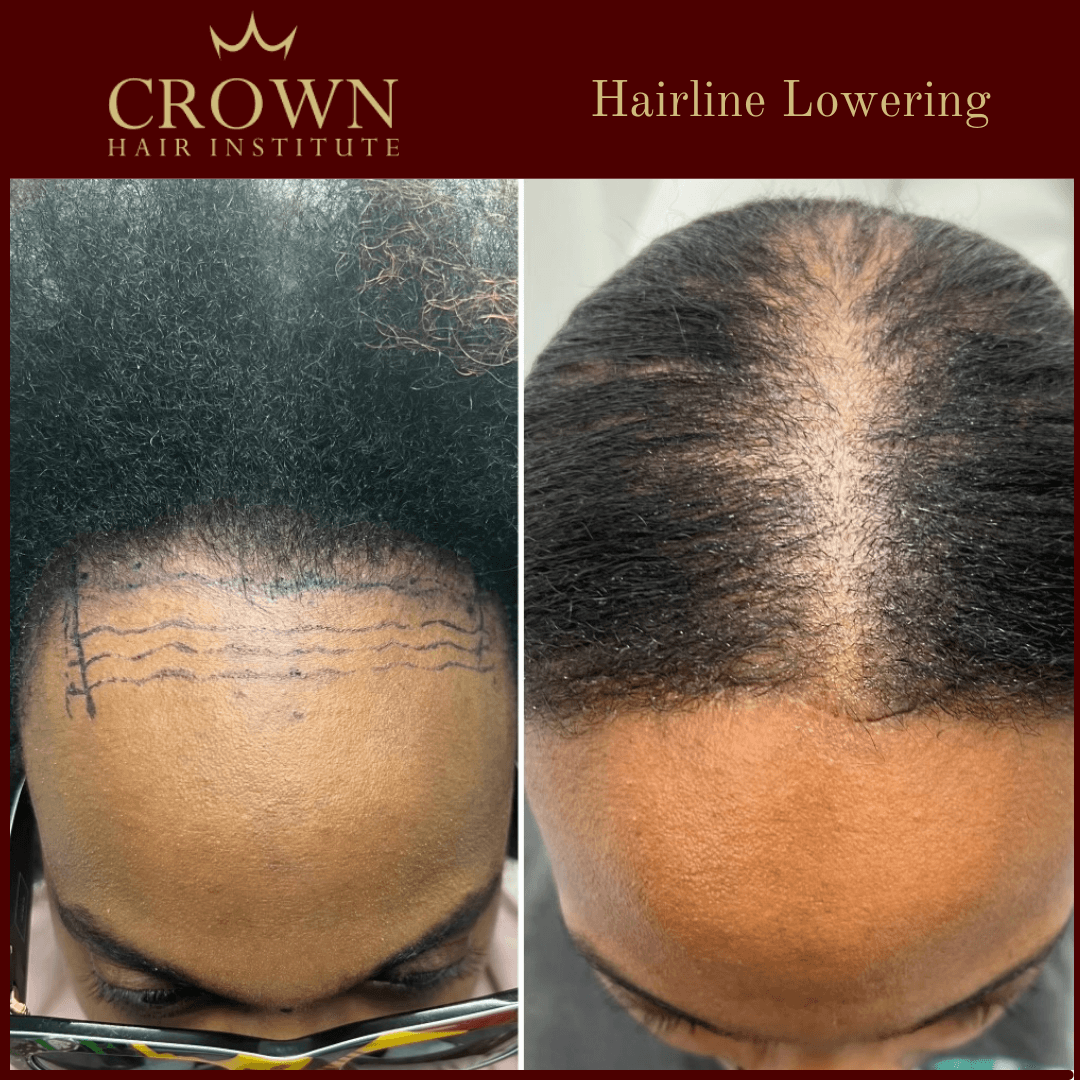
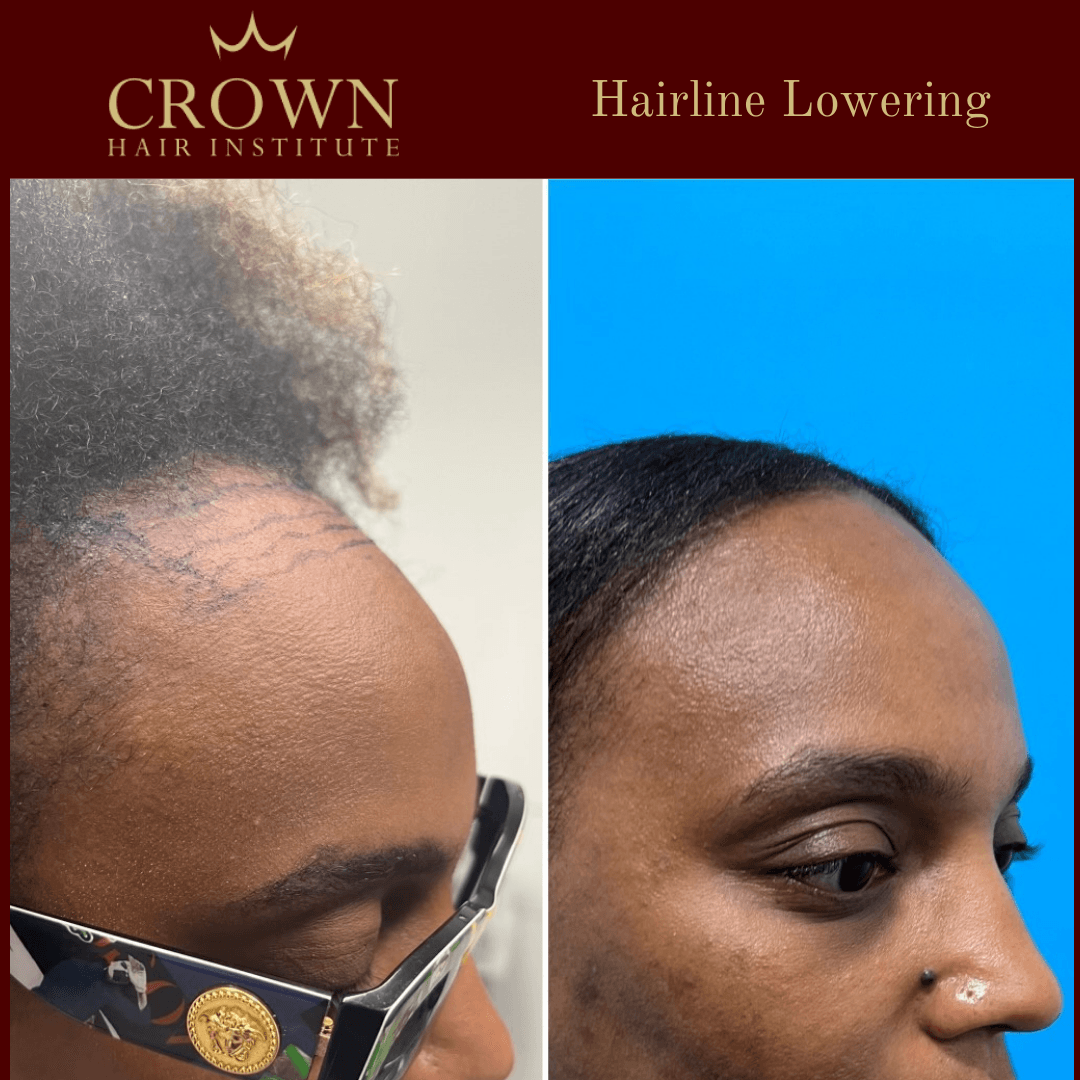
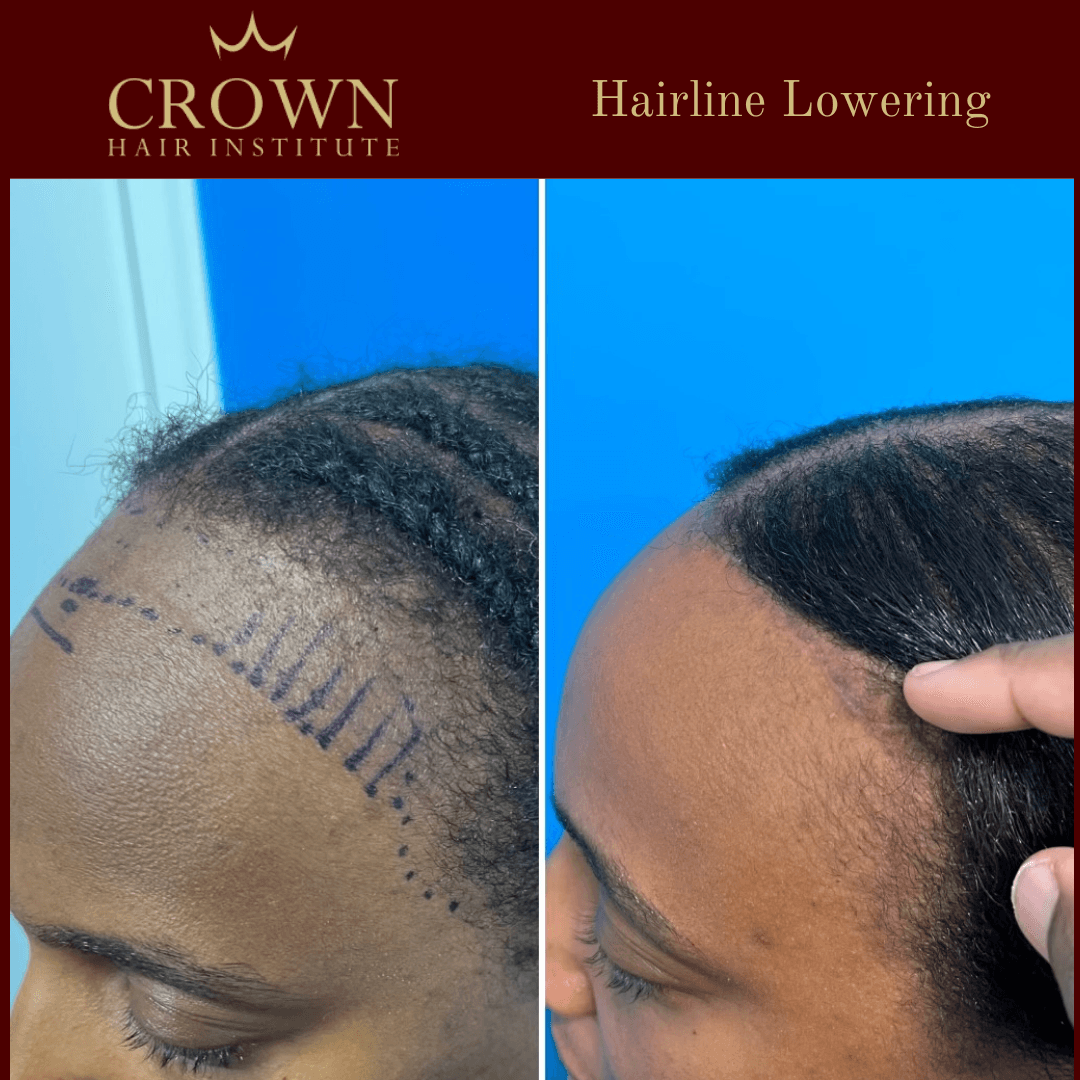
Hairline lowering — also called forehead reduction or scalp advancement surgery — is a procedure that physically advances the entire scalp tissue forward, bringing the hairline 1 to 2 inches (2.5 to 5 cm) closer to the eyebrows. Unlike a hair transplant, which fills in thinning areas with individual grafts, hairline lowering moves the existing hairline as a complete unit, with full density and coverage that is visible immediately after surgery.
The incision is placed precisely at the hairline using a trichophytic technique: the wound edge is beveled so that hair follicles grow directly through the healed scar line. Within 6 to 12 months, the scar becomes virtually undetectable — hair grows through it, and it blends seamlessly with the surrounding hairline.
Hairline lowering is an excellent solution for patients with a congenitally high forehead, those seeking a rounder or lower feminine hairline, and patients who have experienced some frontal recession that does not require graft transplantation. It can also be combined with FUE hair transplant — lowering the hairline surgically first, then adding density in zones behind it with transplanted grafts for a comprehensive result.
Patients who are experiencing hair loss due to wearing tight hairstyles (traction alopecia) or naturally receding hairlines (androgenetic alopecia) can both be great candidates for hairline lowering. Good candidates for this surgery may also just have a larger forehead that they would like to be reduced. A thorough consultation with one of our doctors is the final step in confirming which option may be best for you.
Key Benefits
Investment
Investment in Your Confidence
Price
Starting at $20,000
Hairline lowering is priced as a single comprehensive procedure. The cost includes the full surgical procedure, trichophytic closure, all follow-up appointments, and scar management protocol. Financing is available.
Financing available through Cherry
Plans from 0% APR — apply in minutes
What to Expect
Post-Procedure
Compression garment and bandages are applied. Expect swelling in the forehead area. Icing around the eyes is recommended to manage swelling.
Showering Resumes
You may shower, being gentle around the scalp incisions. Swelling begins to subside. Continue icing as needed.
Staples Removed
Staples are removed at your follow-up appointment. You may resume driving at 7–10 days. Most patients feel comfortable returning to normal daily activities.
Continued Healing
Sleep elevated for 4 weeks. No hair coloring for 1 month. Your brows will settle into their final position over the coming months as swelling fully resolves.
Full Recovery
Full healing is achieved. Any temporary hair loss around the incision area typically resolves within the first month. The scar matures and becomes virtually undetectable as hair grows through it. Results are permanent.
Frequently Asked Questions
How much can my hairline be lowered?
Typically 1 to 2 inches (2.5 to 5 cm). The precise amount depends on your scalp laxity — how much the scalp can be advanced without placing excess tension on the wound closure. Dr. Truesdale assesses this with a physical examination at consultation, moving the scalp forward to estimate the achievable advancement.
Will I have visible scarring?
With any surgical procedure, some scarring is present. However, our surgeons utilize the most advanced techniques to minimize scarring. By incorporating the natural lines of the face and hairline, scars are minimized and barely visible to the naked eye.
How long is the healing process?
Immediately after surgery there may be some mild swelling for a few days. This is normal and expected. You can wash your hair after 24 hours, and healing is usually complete within 7–10 days. Individual results may vary.
Can men have hairline lowering?
Yes, though it is more commonly performed in women. Men with good scalp laxity, a naturally high forehead, and a stable hair loss pattern — not expected to progress further — can be good candidates. Dr. Truesdale will evaluate your pattern carefully before recommending this approach.
What is the difference between hairline lowering and a transplant?
Hairline lowering physically moves your existing hairline forward by advancing the scalp tissue. You get your full current hair density immediately in the new position. A hair transplant adds individual grafts to fill areas of thinning or recession, with results developing over 12–18 months. They address different problems and can be combined.
Is hairline lowering suitable for people with hair loss?
Hairline lowering works best for patients with a stable, dense hairline that is simply positioned higher than desired. If you also have thinning or loss behind the hairline, a transplant may be a better or complementary solution. Dr. Truesdale will assess your entire scalp at consultation.
Can hairline lowering be combined with a hair transplant?
Yes. Combining both procedures is possible in a staged approach. Dr. Truesdale typically performs hairline lowering first, allows full healing (3–6 months), then performs a FUE transplant behind the advanced hairline to add density and coverage to the mid-scalp or crown.
Your transformation starts
with a conversation.
30 minutes with Dr. Drummond. A custom plan for your hair type and goals. No obligation, no pressure — backed by the Crown Promise.
No commitment required · Virtual consultations available
Send us a message.