Surgical Hair Restoration
Female Hair Restoration
Surgical and non-surgical solutions for women experiencing thinning, diffuse loss, traction alopecia, or hairline recession — designed around the unique patterns and needs of female hair loss.

Dr. Robert Drummond, MD/PhD
Hair Restoration · Beverly Hills
“Women's hair loss is profoundly different from men's — both biologically and emotionally. Female pattern loss tends to be diffuse rather than focal, and the causes are more varied. My job is to understand exactly what is happening, why it is happening, and design a plan that restores not just hair, but confidence.”
Dr. Robert Drummond, MD PhD
Hair Restoration for Women
Female hair loss affects approximately 40% of women by age 50, yet it is dramatically under-discussed and under-treated. Unlike male pattern baldness — which follows predictable Norwood patterns — female hair loss tends to be diffuse, affecting the entire top of the scalp while usually preserving the frontal hairline. It can also manifest as traction alopecia from years of tight styling, or as isolated hairline recession.
At Crown Hair Institute, Dr. Truesdale and Dr. Drummond take a thorough diagnostic approach to female hair loss before recommending any intervention. This includes reviewing bloodwork for thyroid function, ferritin, vitamin D, androgens, and other systemic contributors, as well as dermoscopic scalp analysis to assess miniaturization pattern and donor stability.
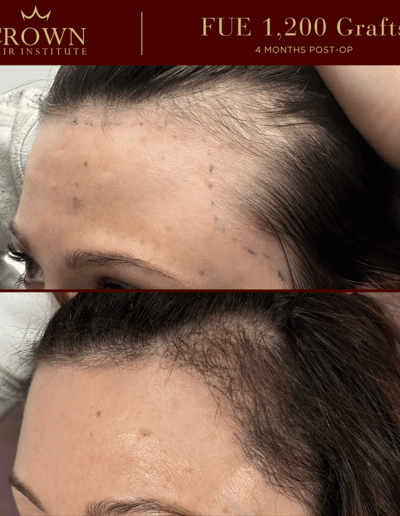
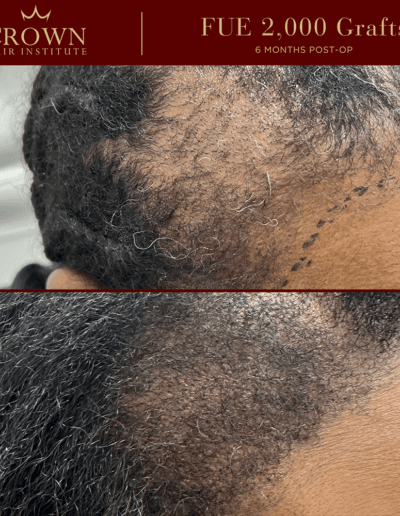
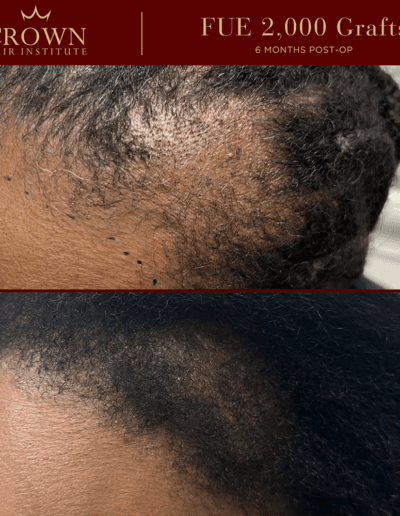
Treatment options include FUE transplantation to restore density in specific zones, hairline lowering for patients with a congenitally high forehead, platelet-rich plasma and exosome therapy to arrest progression and stimulate regrowth, and medical management with topical minoxidil or low-dose oral medication. The plan is individualized based on the specific type, severity, and cause of your hair loss.
When treating hair loss, it is important that we use as many tools as possible to support and augment hair transplantation. Minoxidil (trade name Rogaine) can be used topically or taken orally as a pill, and can help stimulate hair growth. Spironolactone works as an anti-androgen by both slowing down the production of androgens and by blocking the action of androgens, preventing dihydrotestosterone (DHT) from binding to its androgenetic receptor. Estrogen and progesterone pills and creams may be an effective treatment for women with androgenetic alopecia who are going through menopause or whose estrogen and/or progesterone are lacking for other reasons.
Women with well-defined baldness, thinning hair, and those with limited hair loss due to scalp injuries or repeated cosmetic procedures are ideal candidates for hair restoration surgery. Every patient is unique — because the underlying cause of hair loss can be different for each patient, deciding on the best option for hair restoration can only happen after a thorough history and physical exam. Schedule a consultation today to determine what hair restoration procedure is right for you.
Key Benefits
Investment
Investment in Your Confidence
Price
$6.25 per graft
Female restoration plans are highly individualized. A consultation is essential to determine the appropriate approach — surgical or non-surgical — and to provide accurate cost estimates based on your specific hair loss pattern.
Financing available through Cherry
Plans from 0% APR — apply in minutes
What to Expect
Diagnosis & Planning
Dr. Drummond provides a scalp analysis, identifies the cause and pattern of your hair loss, and develops a personalized hair restoration plan based on your hair loss history and goals. Your customized treatment plan may include surgical, non-surgical, or both.
Procedure Day
If proceeding surgically, FUE is performed under local anesthesia. The procedure targets specific thinning zones — the part line, crown, hairline, or temples — while preserving surrounding density.
Immediate Healing
Small scabs form at recipient sites. Mild redness and scalp tenderness is normal. Most women can return to work within 5–7 days with the hair styled over the recipient area.
1-Month Follow-Up
Transplanted hairs shed — follicles remain active beneath the surface. Topical minoxidil and any prescribed oral medications are initiated. Your 1-month follow-up confirms healing is on track.
3-Month Follow-Up
Early new growth begins in transplanted zones. Non-surgical treatments (PRP, exosomes) may be administered to accelerate regrowth. Your 3-month follow-up documents early progress with photographic comparison.
6-Month Follow-Up
New hair growth becomes clearly visible. Density is improving month over month. Your 6-month follow-up includes photographic comparison to document significant progress and review maintenance recommendations.
9-Month Check-In
Continued density improvement. Your surgeon evaluates progress, compares with earlier photos, and determines if any adjustments to your maintenance plan are needed.
Full Result
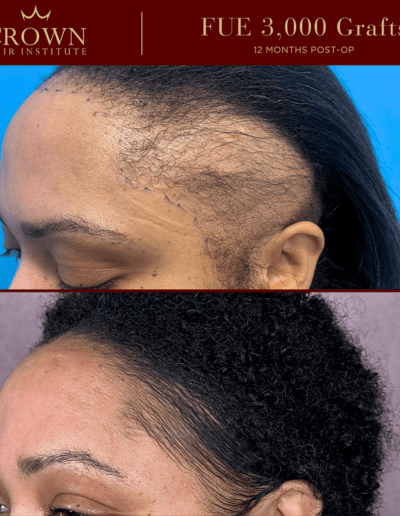
Density and coverage reach final levels. Hormonal optimization and ongoing medical therapy support long-term maintenance. Your 12-month follow-up confirms your final results and reviews ongoing care.
Frequently Asked Questions
Why is my hair thinning and what should I do first?
Female hair loss has many causes — androgenetic alopecia, thyroid disorders, iron deficiency, hormonal fluctuations from pregnancy or menopause, traction from styling, and more. A blood panel is the essential first step before any treatment is initiated. Without identifying the cause, any intervention addresses symptoms rather than the underlying problem.
Is hair transplant surgery safe for women?
Yes, though women must be carefully assessed before surgery. Because female hair loss is often diffuse, some women do not have a stable enough donor area for transplantation. Women with clearly defined focal loss — traction alopecia hairline recession, for example — are often excellent candidates. Dr. Truesdale evaluates donor stability carefully at consultation.
What is traction alopecia?
Traction alopecia is hair loss caused by repetitive tension on the hair follicles from tight hairstyles — braids, weaves, extensions, tight ponytails, and similar styles. It commonly presents as recession at the temples and hairline margins. Early traction alopecia is reversible if the tension is removed; long-standing traction causes permanent follicle damage requiring transplantation.
Can minoxidil help women with hair loss?
Yes. Topical minoxidil (2% or 5%) is FDA-approved for women and is an effective first-line treatment for androgenetic alopecia. It stimulates hair growth and slows further miniaturization. Low-dose oral minoxidil is also increasingly used for women who prefer systemic dosing. Dr. Drummond will recommend the appropriate formulation based on your hair loss pattern.
Will a transplant look natural in women?
Yes. Dr. Truesdale designs the placement specifically for women — preserving the natural feminine hairline, maintaining appropriate temple shape, and placing grafts in the part line or crown to add density without a pluggy appearance. The goal is improved density that looks entirely natural within your existing hair.
What about hair loss from postpartum shedding or menopause?
Postpartum hair shedding (telogen effluvium) is temporary and typically self-resolves by 12 months after delivery. Surgery is not appropriate during this phase — nutritional support and PRP or exosome therapy are more appropriate. Menopausal hair loss is often multifactorial and responsive to hormonal optimization plus topical or oral minoxidil before surgical intervention is considered.
Your transformation starts
with a conversation.
30 minutes with Dr. Drummond. A custom plan for your hair type and goals. No obligation, no pressure — backed by the Crown Promise.
No commitment required · Virtual consultations available
Send us a message.
Explore More
Related Procedures
Non-Surgical
Exosome Therapy
Concentrated stem-cell signaling factors stimulate dormant follicles and accelerate graft survival when combined with your transplant.
Learn MoreNon-Surgical
PRP Therapy
Your body's own platelet-rich plasma activates growth factors that strengthen existing follicles and complement surgical results.
Learn MoreNon-Surgical
Topical Treatments
Medical-grade scalp serums and shampoos engineered to maintain your transplant and reinforce native hair density.
Learn MoreNon-Surgical
Medication
FDA-approved finasteride and minoxidil protocols that stabilize hair loss and protect your surgical investment over time.
Learn More